
Application and Selection Guide of LCD Bar-Type In-Vehicle Displays in Smart Transportation
With the continuous advancement of smart transportation systems, in-vehicle information displays are evolving toward higher reliability, intelligence, and lower power consumption.
Today’s mainstream LCD bar-type in-vehicle displays feature industrial-grade characteristics such as vibration resistance, impact resistance, wide-temperature operation, and waterproof/dustproof protection.
While meeting the stringent operating conditions of the transportation industry, they provide stable and clear information display, making them one of the most cost-effective display solutions in smart transportation systems.
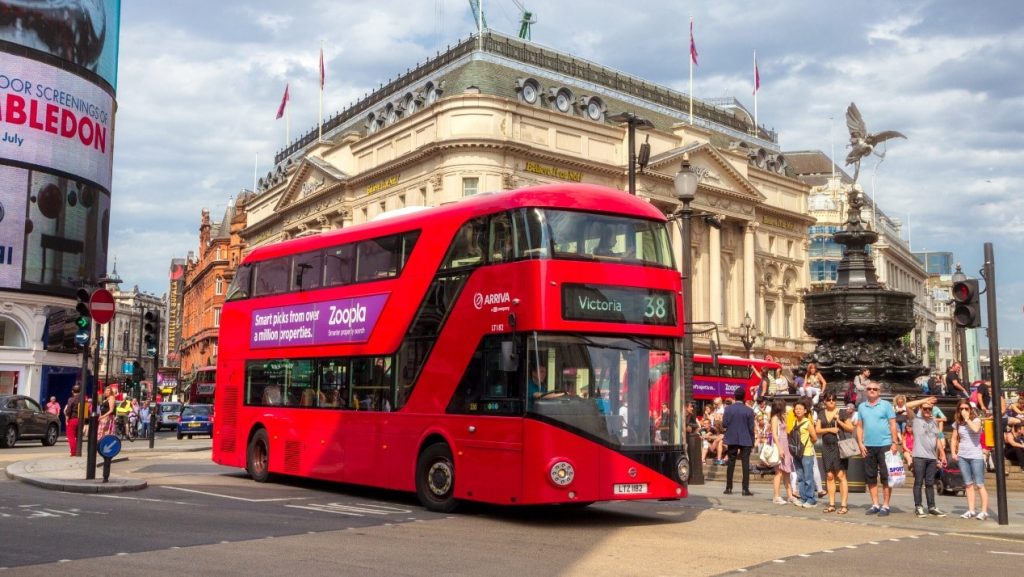
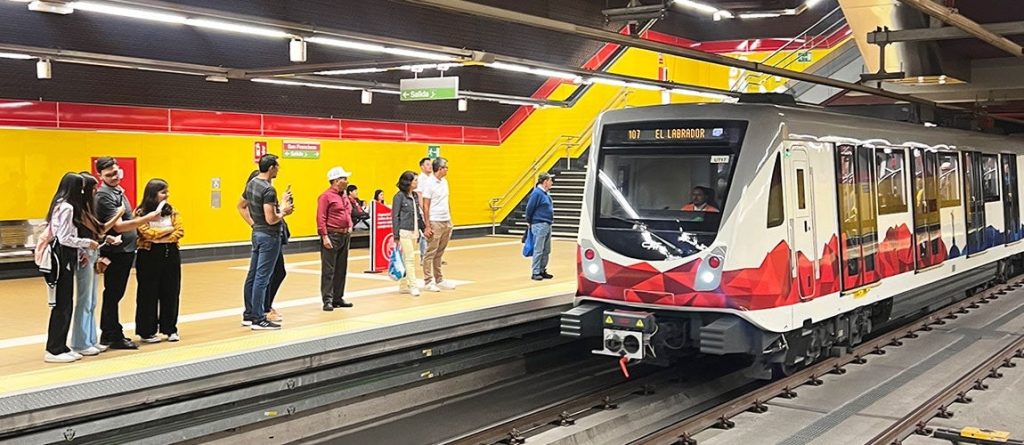
Typical Applications of In-Vehicle Passenger Bar Displays
Installation Locations
- Vehicle ceiling
- Above or beside vehicle doors
Main Functions
- Route and station information display
- Arrival alerts and transfer guidance
- Real-time passenger flow and operation status
- Public service announcements and emergency notifications
Key Technical Features
- Vibration resistance ≥ 5 Grms, compliant with rail transit vibration standards, capable of long-term operation under frequent starts, stops, and vehicle vibrations
- Wide operating temperature range: -20°C to 70°C, suitable for cold regions and high-temperature vehicle interiors
- Brightness ≥ 500 cd/m², combined with AG anti-glare coating to ensure readability under complex lighting conditions
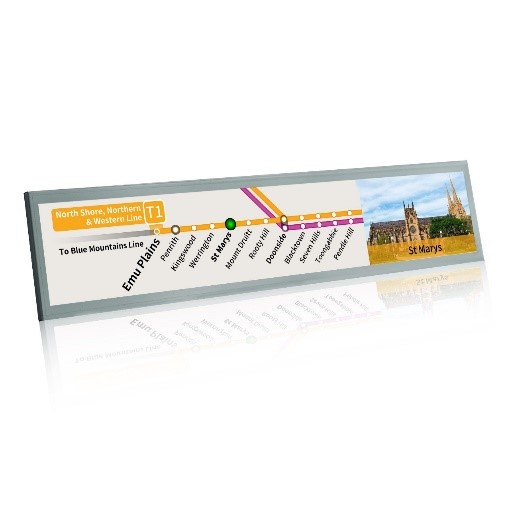
Core Value of LCD In-Vehicle Bar Displays
Form-factor adaptability + industrial-grade reliability + intelligent low-carbon operation constitute the core advantages of LCD in-vehicle bar displays in smart transportation.
Their bar-type structural design effectively addresses space constraints inside vehicles, while industrial-grade construction ensures resistance to vibration and temperature variations. At the same time, they support data integration and low-power operation, meeting the dual requirements of intelligent information display and long-term stable operation.
How to Select the Right Display Quickly — Three Key Steps
When selecting LCD in-vehicle bar displays for smart transportation scenarios, focus on the following three dimensions:
- Operating conditions: vehicle vibration, temperature and humidity changes
- Application scenarios: multi-angle visibility, real-time data updates
- Operational requirements: long operating hours, energy efficiency, and stability
Based on these factors, priority should be given to four key indicators:
display performance, environmental adaptability, compatibility and durability, and intelligent expansion capabilities.
Match Application Scenarios First, Then Refine Specifications
Bus / Coach Applications
Key requirements: clear station announcements, easy installation, low maintenance cost
- Prefer lightweight bar displays
- Emphasize vibration resistance and wide-temperature capability
- Suitable for ceiling or door-side installation
Metro / Rail Transit Applications
Key requirements: high stability, wide viewing angles, long-term continuous operation
- Higher vibration resistance required (≥ 5 Grms)
- Support for anti-burn-in protection mechanisms
- Ensure multi-directional visibility in high passenger flow environments
Key Technical Parameter Selection Recommendations
- Display Performance
Resolution
- Basic station display: 1920 × 540
- HD maps / advertising content: 1920 × 720 or higher
- For long-distance viewing, resolution may be moderately reduced to control costs
Brightness & Anti-Glare
- Vehicle interior: 300–500 cd/m²
- Strong ambient or direct sunlight: 700–1000 cd/m²
- AG anti-glare coating is mandatory
- Light-sensor-based automatic brightness adjustment is recommended for energy efficiency
Contrast Ratio & Response Time
- Contrast ratio ≥ 1200:1 for clear text-background separation
- Dynamic information display: response time ≤ 8 ms
- For video playback, Fast IPS panels (≤ 3 ms) are recommended
Viewing Angle
178° wide viewing angle IPS panels to ensure visibility from multiple positions
- Environmental Adaptability & Structural Design
Operating Temperature
- Standard environments: 0°C to 50°C
- Cold / high-temperature regions: -20°C to 70°C
Vibration Resistance & Protection
- Bus / coach: pass 10G vibration testing
- Rail transit: vibration resistance ≥ 5 Grms, reinforced FPC design recommended
- Front panel protection rating ≥ IP65
Installation Methods
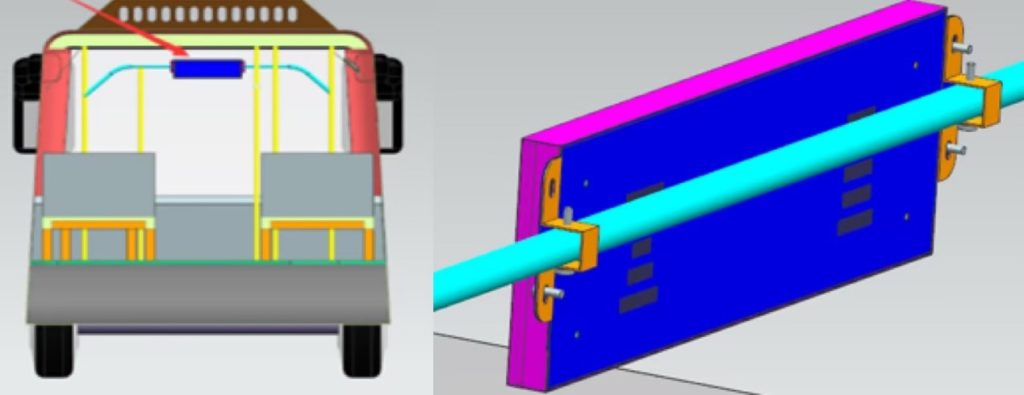
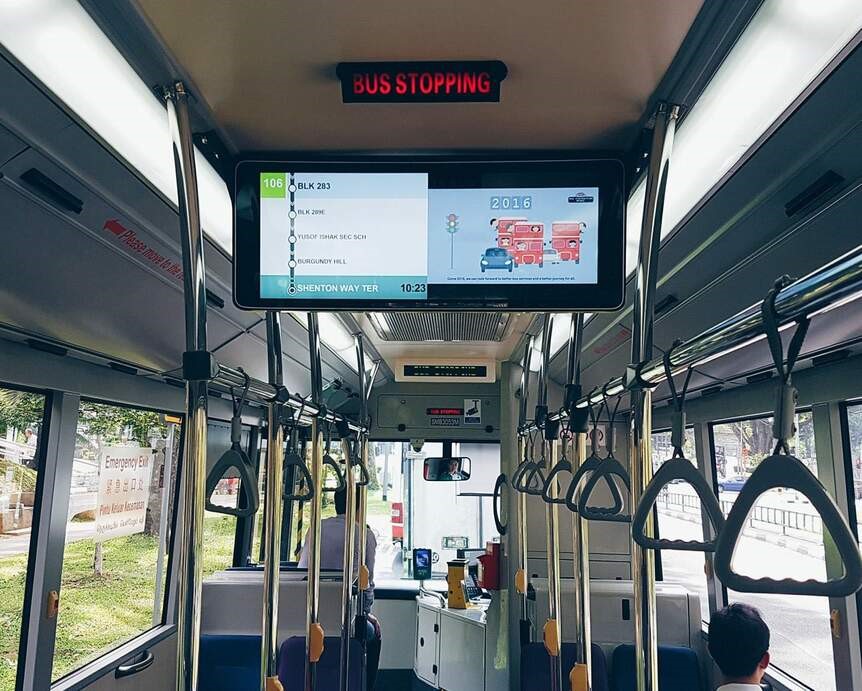
- Suspended mounting: suitable for bus ceilings, space-saving and easy to maintain
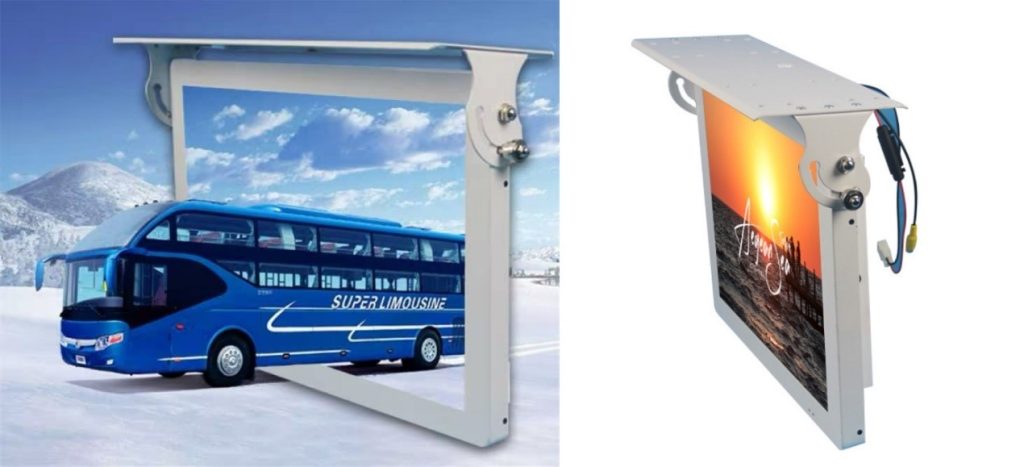
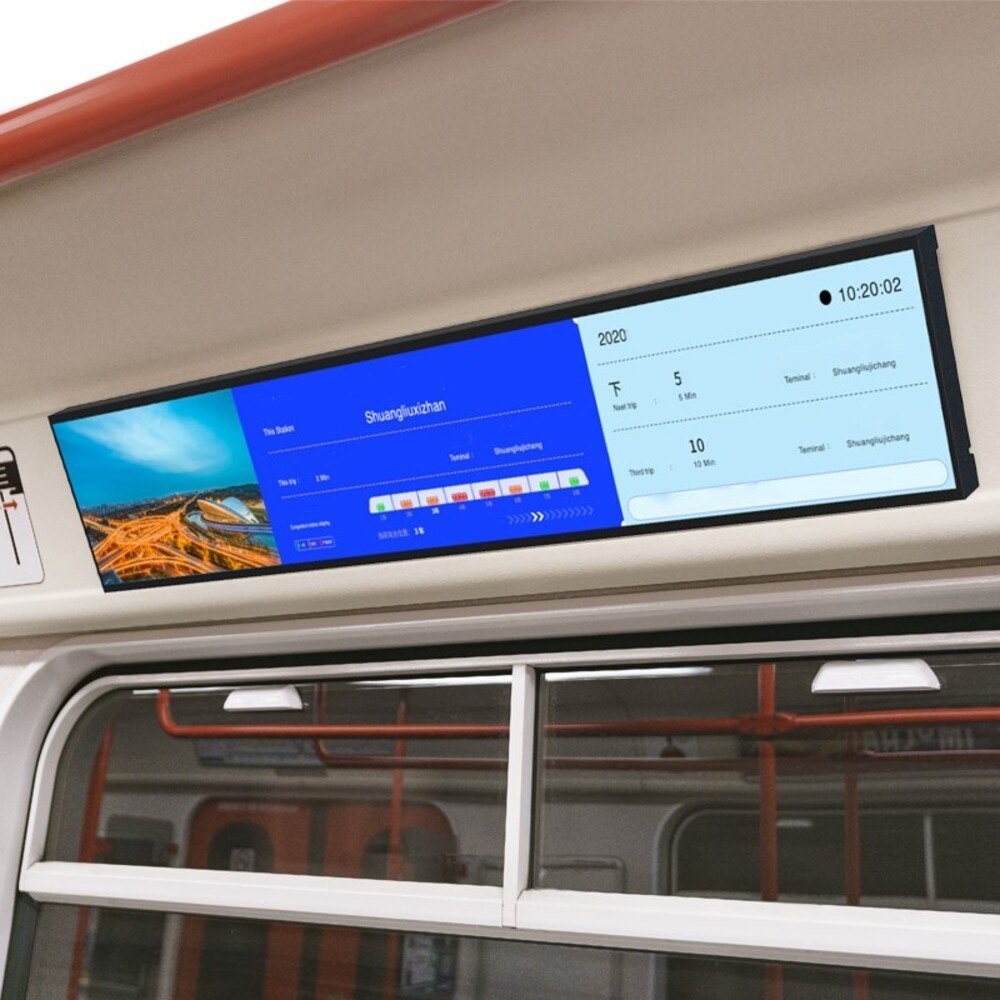
- Embedded mounting: commonly used in metro air ducts or side walls, offering enhanced structural stability
- Custom installation solutions available to match different vehicle models and enable quick installation/removal
- Compatibility & Service Life
Interface Configuration
- Station announcement systems: RS485
- Vehicle systems: RS485 / CAN bus
- High-definition signal input: HDMI 2.1, DP 1.4
- Intelligent expansion: reserved 4G / 5G module interfaces
Reliability & Lifespan
- MTBF ≥ 50,000 hours
- Support for pixel shifting, scheduled screen-off, and other anti-burn-in technologies
- Suitable for continuous operation ≥ 16 hours per day
Compliance Certification & Service Support
Certification Requirements
- Compliant with rail transit standards such as EN50155
- Certified with CE and RoHS, meeting safety and environmental regulations
Service Capability
- Minimum 1-year warranty
- Support for customized size, brightness, interface, and other specifications
LCD in-vehicle bar displays, with their industrial-grade stability, flexible form-factor design, and mature display performance, have become an essential component of smart transportation information systems. Through scientific selection, they enable excellent display quality while ensuring long-term stable operation and low-carbon, energy-efficient performance.
Techtion Smart LCD in-vehicle bar displays are designed for buses, metro systems, and comprehensive smart transportation scenarios, delivering highly reliable and customizable professional display solutions.
For more information, please feel free to contact us.
 Previous Article
 Microsoft Teams
 WhatsApp
 Email
Email Inquiry
 WeChat
 TOP
TOP