
Selection Trends for Railway Display Systems in Japan: Why High Reliability Matters More Than Low Procurement Cost
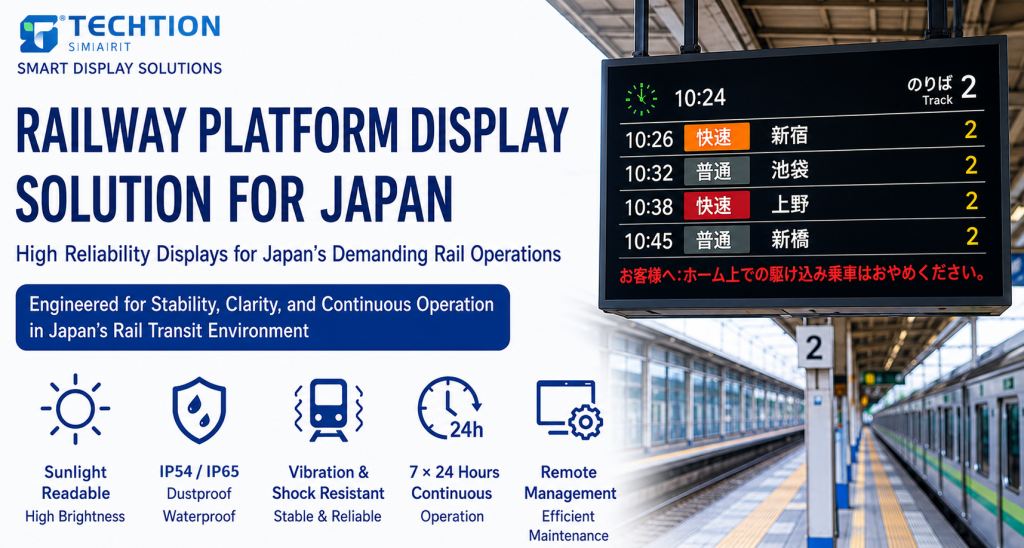
Figure 1: Japan’s high-density and highly complex rail transit environment places higher demands on the stability, readability, and maintenance efficiency of passenger information display systems.
Japan’s railway system is globally recognized for its punctuality, high passenger density, and refined operational management. For passenger information display systems deployed in stations, platforms, train cabins, and transfer corridors, equipment failure means more than a single screen outage — it can directly affect passenger guidance, train information delivery, and overall operational order.
As a result, the selection criteria for railway display systems in Japan are shifting from simple “display specification comparisons” toward evaluations of long-term operational reliability. Brightness, viewing angle, and resolution are only the baseline requirements. The real factors determining project success are the display terminal’s ability to maintain reliable performance under strong sunlight, vibration, humidity, salt spray, temperature fluctuations, and continuous 24/7 operation.
1. Why Does Japan’s Rail Transit System Have Lower Tolerance for Display Failures?
The operational characteristics of Japan’s railway systems create extremely high requirements for display equipment:
- Long daily operating hours with limited maintenance windows
- High passenger density during peak hours requiring timely and accurate information delivery
- Continuous vibration and shock in platforms and train cabin environments
- Semi-outdoor, outdoor, and coastal stations exposed to humidity, dust, rain, and salt spray
- Stable integration with PIS/CMS systems for multilingual, multi-line, and multi-station information management
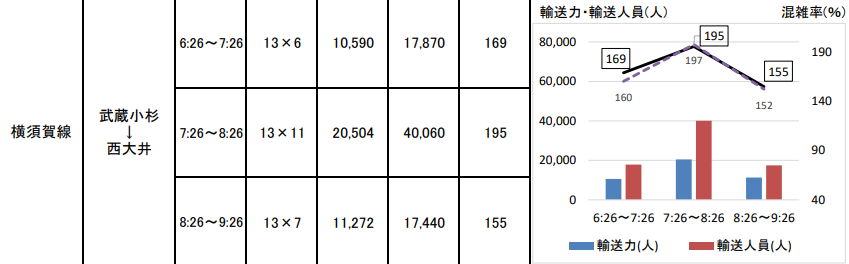
Figure 2: Illustration of passenger density during peak hours. In high-density operating environments, passenger information display systems must remain continuously stable and clearly readable.
Under such market conditions, operators typically prioritize all-weather stability, long-life components, industrial-grade thermal design, shock and vibration resistance, and low maintenance requirements. For display suppliers, the key is not simply offering “higher specifications,” but delivering mature solutions that can be verified over long-term operation, continuously supplied, and easily maintained.
2. Key Technical Challenges for Railway Display Systems in Japan
Railway display systems must simultaneously meet requirements for visual performance, structural reliability, environmental adaptability, and system integration capability.
The following table summarizes common application challenges in Japanese railway environments and the corresponding adaptable solutions from Techtion Smart.
| Key Challenge | Railway Application Requirement | Techtion Smart Adaptable Solution |
|---|---|---|
| Sunlight Readability | Semi-outdoor and outdoor platforms require clear visibility under strong sunlight, reflections, and side lighting. Typical brightness demand is around 1000–2500+ cd/m². | High-brightness industrial LCD displays with AG/AR cover glass, optical bonding, ambient light adjustment, and customized high-brightness backlight solutions. |
| Environmental Adaptability | Equipment must withstand temperature and humidity changes, rain, dust, salt spray, and long-term outdoor operation. | IP65 front panel, IP67 fully sealed designs, SUS304 stainless steel housing, wide-temperature operation, and fanless enclosed structures. |
| Vibration Resistance & Structural Reliability | Platforms, train cabins, and door areas are exposed to vibration and shock, requiring long-term structural stability and reliable connections. | Reinforced structural design, reliable connectors, customized mounting holes, bar-type displays, embedded structures, portrait/landscape switching, and slim-profile designs. |
| 24/7 Continuous Operation | Displays must operate continuously with minimized risks of black screens, overheating, backlight degradation, and on-site maintenance frequency. | Industrial-grade LED backlight, passive cooling, low-power platforms, remote power control, RTC scheduling, and Wake-on-LAN support. |
| System Integration Capability | Stable integration with PIS, CMS, station control systems, PA systems, and local controllers is required. | Optional Android/Linux/x86 platforms supporting LAN, USB, HDMI, RS232/RS485, GPIO, and software platform integration. |
3. Technical Selection Recommendations for Different Scenarios
There is no single “universal display” suitable for every railway application in Japan. Installation location, environmental conditions, information refresh frequency, and interface requirements all directly affect the choice of display technology and mechanical structure.
| Application Scenario | Main Challenges | Recommended Solution |
|---|---|---|
| Semi-Outdoor Platforms (with roof coverage) | Side sunlight, reflections, humidity, condensation, and limited thermal space | 1000–1500 cd/m² high-brightness LCD + optical bonding + AG/AR cover glass + IP65 front panel. Suitable for train arrival information, transfer guidance, and platform PIS displays. |
| Fully Outdoor Platforms | Direct sunlight, typhoons, waterproofing, dustproofing, wide-temperature operation, and long-term outdoor aging | 2000+ cd/m² high-brightness LCD + optical bonding + AG/AR/anti-UV/anti-IR cover glass (IK08–IK10) + IP65 fully enclosed structure + wide-temperature components + intelligent brightness control. E-paper or cholesteric LCD may also be considered for low-refresh applications. |
| Platform Corridors / Train Doors / Cabin Interiors | Limited installation space, multi-angle viewing, vibration, concealed interfaces, and structural customization | Bar-type LCD displays + IPS wide viewing angle + vibration-resistant structure + customized aspect ratio + portrait/landscape installation. Suitable for route maps, next-station notifications, and guidance information. |
| Coastal or High-Corrosion Stations | Salt spray corrosion, high humidity, housing aging, and sealing reliability | SUS304 stainless steel display terminals + IP67 fully sealed structure + fanless cooling + salt-spray-resistant design. |
| Ticketing Machines / Self-Service Terminals | Frequent touch interaction, front panel protection, system compatibility, long-term operation, and maintenance convenience | Android or x86 Panel PC + PCAP touch + IP65 front panel + multiple interface expansion + remote management. |
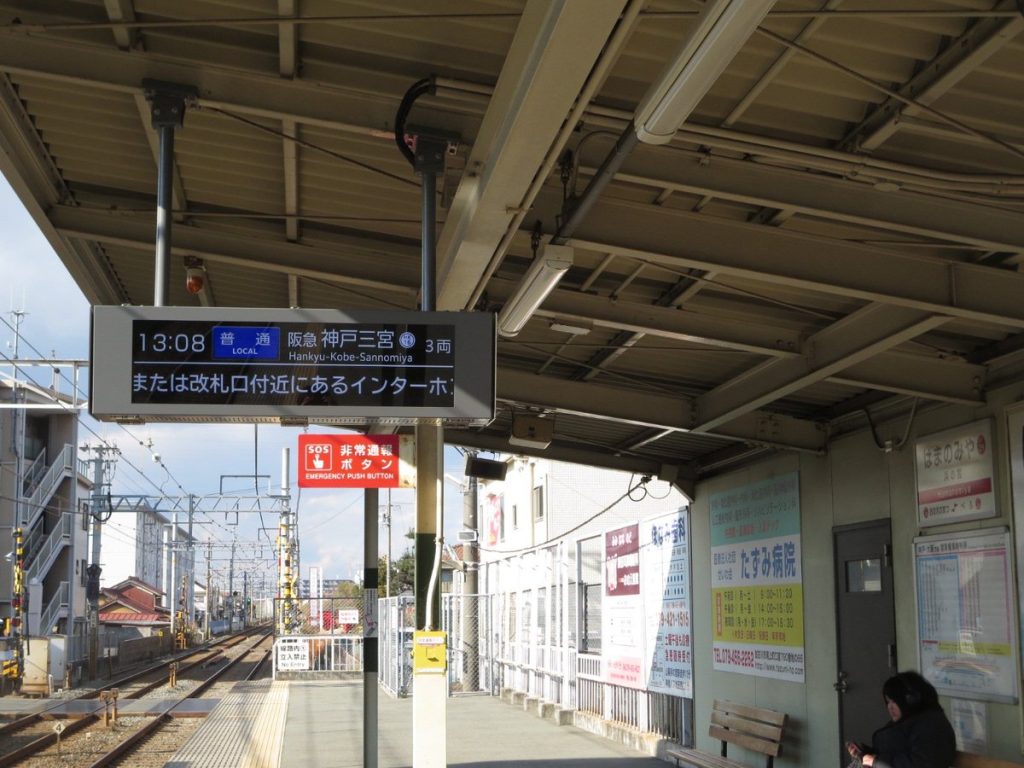
Figure 3: Typical semi-outdoor railway platform display scenario in Japan. Strong sunlight, humidity, vibration, and maintenance convenience are key considerations for display selection.
4. In-Depth Analysis of Core Technologies
4.1 Cover Glass Solutions: AG / AR / Anti-UV / Anti-IR
In high-brightness environments, poor visibility is not always caused by insufficient brightness alone. Reflection, glare, heat accumulation, and material aging can also significantly impact readability.
AG anti-glare, AR anti-reflection, anti-UV, and anti-IR cover glass solutions help reduce reflection interference, improve outdoor readability, and minimize the effects of prolonged sunlight exposure on internal temperature and structural materials.
For platform PIS displays, outdoor bus stop signage, transit shelters, and railway guidance screens, cover glass solutions should be evaluated together with brightness, touch capability, protection level, and structural design. Techtion Smart can provide customized combinations of glass thickness, surface treatment, and touch solutions according to project requirements.
4.2 Optical Bonding: Improved Contrast and Reduced Condensation Risk
Compared with air-gap structures, optical bonding reduces internal reflections between the cover glass and LCD panel, improving image contrast and clarity.
In semi-outdoor, high-humidity, or large temperature fluctuation environments, optical bonding also helps reduce condensation, dust ingress, and whitening effects inside the display.
For high-reliability railway applications in Japan, optical bonding is not only a visual enhancement technology but also a key process for improving long-term reliability.
4.3 Fully Enclosed Fanless Cooling: Reducing Maintenance Risks
Railway display systems are typically required to operate continuously in locations where maintenance access is limited.
While active fan cooling may offer high short-term cooling efficiency, fans can easily accumulate dust, pollen, moisture, and salt spray, eventually causing clogging or failure. This may lead to overheating, throttling, black screens, or unstable system performance.
Techtion Smart’s outdoor display terminals and industrial panel PC solutions utilize aluminum alloy or stainless-steel structures, thermal backplates, internal heat-conduction design, low-power platforms, and thermal control strategies to achieve fanless passive cooling and reduce long-term maintenance pressure for system integrators.
4.4 Intelligent Backlight & Brightness Control: Balancing Readability and Energy Consumption
Railway platforms require high brightness during daytime while lower brightness is preferred at night to reduce glare and power consumption.
By integrating ambient light sensors, RTC scheduling, remote brightness adjustment, and backlight control strategies, display systems can maintain passenger readability while reducing power consumption, extending LED backlight lifespan, and minimizing thermal stress.
4.5 E-Paper & Cholesteric LCD: Ideal for Low-Power and Emergency Information Applications
For low-refresh scenarios such as station signage, route maps, announcement boards, emergency evacuation instructions, and backup information panels, E-paper and cholesteric LCD technologies offer unique advantages.
Their bistable display characteristics allow content to remain visible even after power loss while consuming extremely low power, making them suitable as backup information channels independent from the primary power system.
4.6 Platforms & Interfaces: From Standalone Displays to System Nodes
Railway display terminals are often required to integrate with PIS, CMS, station control systems, or local controllers.
Techtion Smart provides Android, Linux, and x86 platform options with customizable LAN, USB, HDMI, RS232/RS485, GPIO, RTC scheduling, Wake-on-LAN, remote power management, and centralized management support.
5. TCO Model: Why Are Japanese Operators Willing to Pay a Premium for High Reliability?
In Japan’s railway market, procurement cost is only one part of the decision-making process.
Operators focus more on long-term stability, maintenance costs, spare parts management, system compatibility, and operational risk throughout a 5–10 year lifecycle.
Using a simplified model of 100 semi-outdoor platform display terminals over a 5-year lifecycle:
Commercial-grade solutions may offer lower initial procurement costs, but under high brightness, temperature fluctuation, vibration, and continuous operation conditions, they may face higher failure rates, shorter replacement cycles, and more frequent on-site maintenance.
Railway-grade solutions require higher upfront investment but generally provide longer service life, lower maintenance frequency, and more stable system compatibility.
| Cost Item | Commercial-Grade Solution | Railway-Grade Solution |
|---|---|---|
| Initial Procurement | Approx. RMB 3,000/unit × 100 units = RMB 300,000 | Approx. RMB 8,000/unit × 100 units = RMB 800,000 |
| Replacement Cycle | May require replacement within 2–3 years; repeated procurement risk within 5 years | Designed for long-term railway-grade reliability and stable operation |
| Maintenance Labor | Higher frequency of on-site troubleshooting, replacement, and spare-part turnover | Primarily routine inspection and remote management with reduced on-site maintenance |
| System Adaptation Cost | Replacement may require re-adaptation of structure, interfaces, software, and spare parts | Once validated, can remain as a stable long-term solution |
| Operational Risk | Black screens, water ingress, overheating, or communication failures may affect passenger information delivery | Lower operational risk and improved service continuity |
Note: The above is a simplified example model. Actual project costs depend on display size, brightness, protection level, installation method, maintenance conditions, and project scale.
Therefore, Japanese railway operators are willing to pay a premium for high reliability not simply to pursue higher specifications, but to reduce lifecycle maintenance costs, downtime risks, replacement costs, and operational accident risks.
For display suppliers, entering the Japanese railway market is not about providing the “latest technology,” but about delivering mature solutions that can be trusted, continuously supplied, and stably operated over the long term.
6. From “Display Hardware” to “Reliable Railway Operation Solutions”
In railway systems, display terminals have evolved from standalone hardware devices into critical nodes within passenger information systems and station operation systems.
They must reliably display train information, transfer guidance, operational notices, emergency alerts, and multilingual content while maintaining stable connections with backend systems, local controllers, and remote management platforms.
Techtion Smart specializes in intelligent transportation and industrial display solutions, providing support for railway PIS, bus stop signage, outdoor digital signage, and self-service terminal applications, including:
- High-brightness industrial LCD display solutions for outdoor readability
- Bar-type displays, customized aspect ratios, and narrow-space structural solutions
- Android / Linux / x86 integrated platforms
- IP65 front panels, IP67 fully sealed designs, and SUS304 stainless steel display terminals
- Optical bonding, AG/AR cover glass, touch integration, and structural customization
- E-paper and cholesteric LCD low-power display solutions
- Customized RS232 / RS485 / LAN / USB / HDMI interfaces
- RTC scheduling, Wake-on-LAN, remote power control, and centralized management support
For Japan’s railway and public transportation market, Techtion Smart will continue focusing on the core requirements of stability, clarity, low maintenance, and easy integration to help system integrators and operators build more reliable, energy-efficient, and maintenance-friendly passenger information display systems.
 Previous Article
 Microsoft Teams
 WhatsApp
 Email
Email Inquiry
 WeChat
 TOP
TOP